
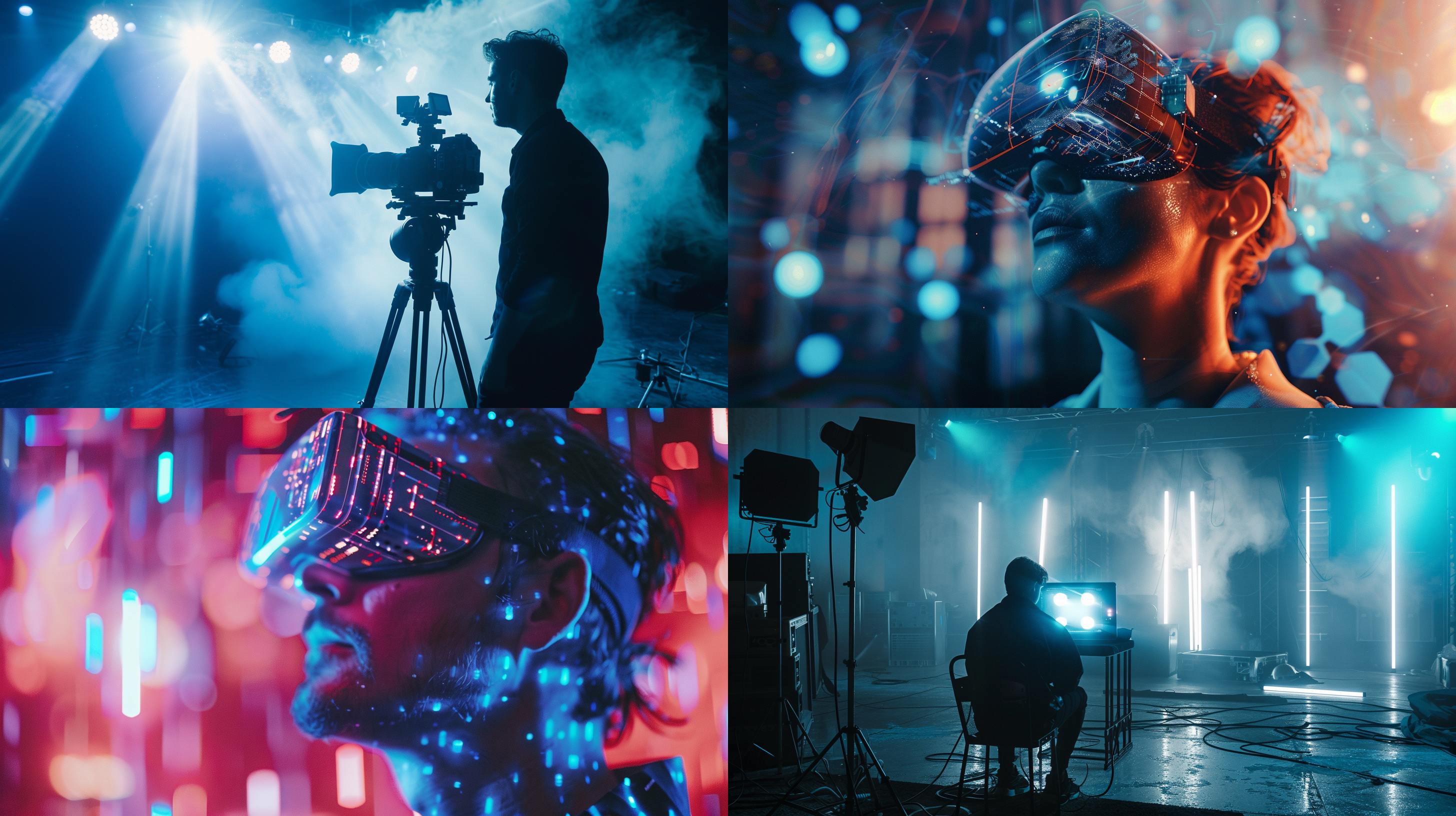
The integration of artificial intelligence (AI) into the realm of filmmaking has ushered in a seismic shift, reshaping traditional roles and workflows. As AI technologies continue to evolve, the collaborative dynamic between human creators and intelligent systems is redefining the boundaries of what’s possible on the big screen.
Redefining Roles in the Filmmaking Process
At the helm of this transformation lies the director, whose role is being reimagined in an AI-augmented filmmaking process. Rather than being replaced by AI, directors now have the opportunity to elevate their craft, leveraging AI as a powerful creative partner.
One of the most significant impacts of AI is in the pre-visualization and ideation phases. AI tools can generate an array of concept art, storyboards, and even rough animatics, allowing directors to rapidly explore multiple creative directions before committing to a specific vision. This iterative process, fueled by AI’s generative capabilities, empowers directors to experiment freely, pushing the boundaries of their imagination.
During production, AI can assist directors in real-time by providing insights and recommendations based on analyzing vast amounts of data. From optimizing camera angles and lighting setups to suggesting alternative shot compositions, AI becomes a virtual advisor, enhancing the director’s decision-making process.
The AI-Augmented Creative Team
Beyond the director’s role, AI is reshaping the entire filmmaking ecosystem, redefining the responsibilities and workflows of various creative roles. Screenwriters, for instance, can leverage AI’s natural language processing capabilities to generate unique story premises, character arcs, and dialogue, serving as a creative catalyst for their writing process.
In the realm of visual effects (VFX), AI is poised to revolutionize traditional pipelines. AI-driven tools can automate labor-intensive tasks like rotoscoping, allowing VFX artists to focus on higher-level creative endeavors. Furthermore, AI can generate realistic digital environments, characters, and special effects, opening up new realms of possibility for filmmakers.
Editors, too, can benefit from AI’s ability to analyze vast amounts of footage, identifying optimal takes and suggesting creative edits based on narrative flow and emotional impact. This symbiotic relationship between human editors and AI systems streamlines the post-production process while amplifying the storytelling potential.
Building Balanced Creative Teams
As AI assumes a more prominent role in filmmaking, it’s crucial to foster balanced creative teams that harmonize human expertise with AI capabilities. This requires a mindset shift, where filmmakers embrace AI not as a replacement but as a complementary force that augments their creative vision.
Investing in training and upskilling initiatives will be essential to ensure that filmmakers can effectively navigate and leverage AI tools throughout the production process. By cultivating a deep understanding of AI’s strengths and limitations, creative teams can develop workflows that seamlessly integrate human ingenuity with machine intelligence.
Moreover, open communication and collaboration between AI experts, filmmakers, and other creative professionals will be vital in shaping the future of AI-assisted filmmaking. Through this cross-pollination of expertise, new best practices and innovative approaches will emerge, propelling the art form to unprecedented heights.

Conclusion
As AI continues to permeate the filmmaking landscape, the redefinition of roles and responsibilities is inevitable. However, this technological revolution should not be viewed as a threat but rather as an opportunity to forge new collaborative models that elevate human creativity to new heights.
By embracing AI as a powerful ally, filmmakers can push the boundaries of storytelling, visual artistry, and audience engagement. The key lies in striking a balance, where human creators retain their artistic autonomy while harnessing the incredible potential of AI to augment their creative processes.
The future of filmmaking is one of harmonious collaboration between human imagination and artificial intelligence, a symbiosis that promises to redefine the very essence of cinematic expression.